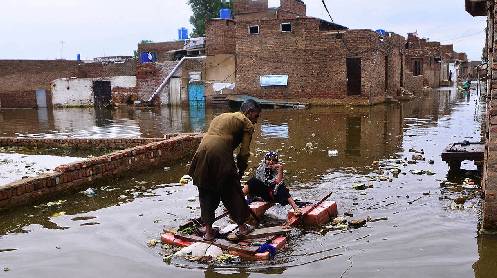
PESHAWAR: Speakers at a conference on Climate Justice and Mobilising Climate Finance for Pakistan stressed the urgent need for a coordinated national and international strategy to highlight Pakistan’s vulnerability to climate change and secure greater climate financing support.
The conference, jointly organised by the Pakistan Development Foundation (PDF), Shaheed Benazir Bhutto Women University Peshawar, Institute of Management Sciences Peshawar, Women University Mardan, and Oil and Gas Development Company Limited, was held at the Governor’s House with Governor Khyber Pakhtunkhwa Faisal Karim Kundi as chief guest.
Panelists noted that Pakistan faces severe climate-related risks despite contributing less than one percent to global greenhouse gas emissions, and urged policymakers, academia, and civil society to work together to “internationalise” the country’s climate justice case.
A panel discussion titled “For a Better Tomorrow: Uniting Stakeholders towards Mobilizing Climate Financing for Pakistan” featured academics, legal experts, and policymakers who highlighted the growing environmental, social, and economic impacts of climate change.
Prof. Dr. Qibla Ayaz, Member of the Shariah Appellate Bench of the Supreme Court of Pakistan, emphasized integrating ethical and religious perspectives into sustainable environmental solutions aligned with societal values.
Khyber Pakhtunkhwa Assembly member Amna Sardar highlighted concerns over weak implementation of environmental legislation, noting that several climate-related laws passed in recent years had not been effectively enforced.
Academic leaders, including Prof. Dr. Safia Ahmed and Prof. Dr. Usman Ghani, shared initiatives being undertaken by their institutions to reduce carbon emissions, including the adoption of green energy systems and water conservation technologies.
Dr. Muhammad Waqas from Kohat University of Science and Technology moderated the session, while Prof. Dr. Muhammad Rafiq, Member Climate Finance at the Pakistan Climate Change Authority, outlined the country’s newly approved climate finance policy and its strategy to mobilize international funding.
Legal expert Advocate Tariq Afghan called for stronger enforcement of environmental laws and practical action, including tree plantation drives and reduction of plastic waste, stressing the need for political commitment to achieve meaningful climate justice.
Prof. Dr. Razia Sultana, Vice Chancellor of Women University Mardan, described climate change as not only an environmental issue but also a human rights and socio-economic challenge requiring coordinated federal and provincial action.
Member of the Khyber Pakhtunkhwa Assembly Kiramat Ullah Khan Chagharmatti highlighted long-term environmental changes in the region and stressed the importance of completing key infrastructure projects, including the Kurram Tangi Dam and associated canal systems, to support agriculture and water management.
In his concluding address, Governor Faisal Karim Kundi underscored that climate change represents a major economic, social, and humanitarian crisis for Pakistan. He stressed the need to transition toward a green economy through investment in renewable energy, climate-resilient infrastructure, and afforestation initiatives.
He further emphasized that empowering Pakistan’s youth and securing equitable international climate financing are essential for building long-term climate resilience and sustainable development.
Story by Amjad Ali Shah